
sheinの日本国内活躍アップユーザー数はユニクロを超え
English goes below: China's cross-border fast fashion internet company SHEIN increased its number of users in Japan to 8.04 million, surpassing Uniqlo's 6.48 million domestic users.

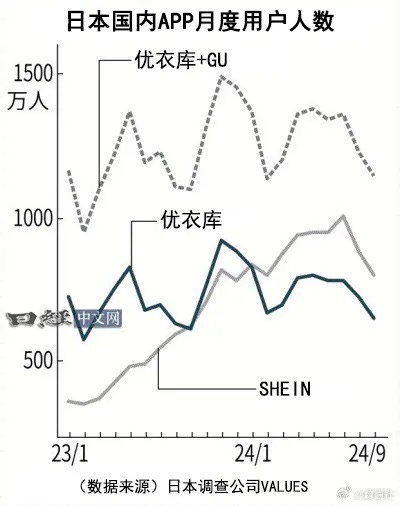
ユニクロは日本の国民的ブランドですが、その座はますます不安定になっています。今年9月、中国発のクロスボーダー型のファストファッションインターネット企業SHEIN(希音)が、日本でのユーザー数を804万人にまで増やし、ユニクロの日本国内の648万人を上回りました。ユニクロがこの数字に到達するまでには約10年かかりましたが、SHEINはわずか3年余りでその記録を破りました。
日本一の富豪であるユニクロ創業者の柳井正氏は、この状況に納得がいかず、最近珍しくSHEINの低価格モデルについて「長続きしない」と批判しています。しかし、彼も忘れているかもしれませんが、1990年代、日本人が「安さ」を売りにするユニクロを購入した際、そのブランドを隠していたこともありました。当時、ユニクロを買うことが身分にそぐわないと感じていたのです。
納得がいかない柳井正「業界では、SHEINやTemuのようなデジタルを軸にした超ファストファッション企業が台頭しています。どのような脅威や影響を感じ、また逆に学ぶべきことは何か?」
これは、10月10日に行われたファーストリテイリングの新年度決算説明会での質問です。
過去1年間、ユニクロやGUなどを運営するファーストリテイリングは、好調な業績を上げました。2023年9月1日から2024年8月31日までの会計年度では、同社の売上高は初めて3兆円を突破し、前年同期比12.2%増となりました。営業利益も5009億円に達し、前年同期比31.4%の増加を記録しました。
この中で、ユニクロの海外市場の4割以上を占める大中華市場では、売上と利益が依然として「堅調」で、売上は6770億円、前年同期比9.2%増を達成しました。これにより、以前から懸念されていたユニクロの中国市場での成長鈍化の不安を一掃し、収益性の低い店舗を閉鎖するという戦略が正しい方向であったことが示されました。
決算説明会での柳井氏は自信満々で、「ついに真のグローバルブランドに向けた競争資格を得た」と述べ、2025年度の売上高目標を3.4兆円と掲げました。
しかし、その熱気の中で、SHEINやTemuに関する質問が場を冷やしました。業界の波乱を多く見てきた柳井氏は、以下のような「納得のいかない」コメントをしました。「スピードは学ぶべきだが、それは誰でもできることだ。国際基準のレベルと倫理から見て、(SHEINのやり方は)違法ではないか?長続きしないだろう(長続きしない)。」
柳井氏は理由を詳細に述べませんでしたが、その背景は想像に難くありません。
先述の通り、SHEINの日本におけるユーザー数は現在、ユニクロを100万人以上も上回っています。ユニクロは2007年にEC事業を始め、2015年には日本国内でEC事業の売上比率を30%にする目標を掲げました。しかし、9年経ってもその比率は15%にとどまり、失敗した。
近年、ユニクロは国内外で値上げ戦略を実施しました。日本の大学生や新社会人にとって、どちらが価格面で魅力的かは言うまでもありません。
SHEINが低価格を実現できる理由は、すでに多くの人に知られています。中国の広東省にある衣料産業クラスターを活用し、AIを使ってトレンドデザインを支援。また、生産体制では、小ロット・素早い反応を重視し、コストを抑えつつ効率的に新商品を投入しています。SHEINは1日に最大3000アイテムの新商品を投入することもあり、Zaraやユニクロなどの伝統的なブランドよりもはるかに速いです。
業界の声によると、中国国内の衣料生産能力の約3分の1がSHEIN向けとされています。
消費業界では、特に消費トレンドが重要視されます。平たく言えば、経済状況に応じて販売方法を調整するということです。SHEINがユーザー数でユニクロを上回った理由も、日本の経済状況の変化をうまく捉えたからです。
近年、日本のメディアはしばしば自国を「貧しい先進国」と表現してきました。これは、大多数の給与所得が過去30年間ほとんど変わらず、さらには最近の円安の影響も受け、実質的な購買力が弱まっていることを意味しています。
昨年9月、日経『東洋経済週刊』はオックスフォード大学の研究を引用し、英国の大学卒業生の初年度の年収は購買力で換算すると478万円(約22.7万人民元)に相当し、米国では539万円(約25万人民元)ですが、日本の大学卒業生の年収はわずか270万円(約12.8万人民元)にとどまると報じました。
さらに、25~34歳の中間層男性の年収も、米国の同年代男性の72.4%にしか相当しません。45~54歳になるとようやく91.8%に達します。
相対的に「貧しい中青年世代」といえる人々は、節約を生活の柱としています。近年、日本のサラリーマンの間では「1億円貯金法」が流行しており、起業や副業による収入ではなく、倹約を徹底することで貯金を増やしています。SHEINに限らず、ある意味でユニクロ自身も、このような経済環境の中で成長してきたのです。
Uniqlo is a national brand in Japan, but its position is becoming increasingly unstable. In September of this year, China's cross-border fast fashion internet company SHEIN increased its number of users in Japan to 8.04 million, surpassing Uniqlo's 6.48 million domestic users. It took Uniqlo nearly 10 years to reach this number, but SHEIN broke that record in just over three years.
Tadashi Yanai, Japan's richest man and the founder of Uniqlo, is dissatisfied with this situation. Recently, in a rare move, he criticized SHEIN’s low-price model, saying it "won't last." However, he may have forgotten that in the 1990s, when Japanese people bought Uniqlo for its low prices, they sometimes hid the brand, feeling it was beneath their status to shop there.
Yanai’s dissatisfaction was clear when asked about the rise of ultra-fast fashion companies like SHEIN and Temu, which are driven by digital platforms. "What threats or influences do you feel from these companies, and conversely, what can you learn from them?" was a question posed during Fast Retailing’s new fiscal year earnings briefing on October 10.
Over the past year, Fast Retailing, which operates Uniqlo and GU, has seen strong performance. For the fiscal year from September 1, 2023, to August 31, 2024, the company’s revenue surpassed 3 trillion yen for the first time, a 12.2% year-on-year increase. Operating profit also reached 500.9 billion yen, up 31.4% year-on-year.
In this, the Greater China region, which accounts for more than 40% of Uniqlo's overseas market, continued to show "steady" sales and profits, with revenue reaching 677 billion yen, a 9.2% year-on-year increase. This erased previous concerns about Uniqlo's slowing growth in the Chinese market and confirmed that the strategy of closing unprofitable stores was heading in the right direction.
At the earnings briefing, Yanai was confident, stating, "We have finally gained the qualifications to compete as a truly global brand," and set a sales target of 3.4 trillion yen for fiscal 2025.
However, the mood was dampened when questions about SHEIN and Temu were raised. Having seen many disruptions in the industry, Yanai made the following dissatisfied remark: "Speed is something to learn, but anyone can do that. From an international standard and ethical perspective, isn’t SHEIN’s approach illegal? It won't last."
Yanai did not elaborate on his reasons, but the background is not hard to imagine.
As mentioned earlier, SHEIN’s user base in Japan now surpasses Uniqlo by more than a million. Uniqlo began its e-commerce business in 2007, setting a target of achieving 30% of its domestic sales through e-commerce by 2015. However, nine years later, the ratio remains at 15%, falling short of that goal.
In recent years, Uniqlo has implemented price hikes both in Japan and abroad. For Japanese university students and young professionals, the question of which is more attractive price-wise is obvious.
The reasons why SHEIN can offer such low prices are already well-known. By leveraging clothing industry clusters in Guangdong, China, utilizing AI to assist in trend design, and focusing on small-lot, fast-response production, SHEIN can introduce new products efficiently while keeping costs low. SHEIN sometimes launches up to 3,000 new items a day, far outpacing traditional brands like Zara and Uniqlo.
According to industry sources, about one-third of China's domestic clothing production capacity is dedicated to SHEIN.
In the consumer industry, particularly where consumption trends are critical, it’s about adjusting your sales methods to match economic conditions. The reason SHEIN surpassed Uniqlo in user numbers is that it has effectively captured the changes in Japan's economic landscape.
In recent years, Japanese media have often described the country as a "poor developed country." This reflects the fact that the majority of wage incomes have remained nearly unchanged for the past 30 years, and with the recent yen depreciation, real purchasing power has weakened.
Last September, Nikkei's "Toyo Keizai Weekly" cited a study from Oxford University, reporting that the first-year salary for UK university graduates, adjusted for purchasing power, is equivalent to 4.78 million yen (approximately 227,000 RMB), while in the US, it is 5.39 million yen (about 250,000 RMB). However, Japanese university graduates earn only 2.7 million yen (about 128,000 RMB).
Moreover, the annual income of middle-class men aged 25-34 is only 72.4% of that of their American counterparts. It’s not until they reach 45-54 years of age that they catch up to 91.8%.
These relatively "poorer middle-aged and young generations" have made frugality a cornerstone of their lives. Recently, among Japanese salarymen, the "100 million yen savings method" has gained popularity—not through entrepreneurship or side jobs, but through extreme savings. In a sense, Uniqlo itself also grew under such economic conditions, much like SHEIN.